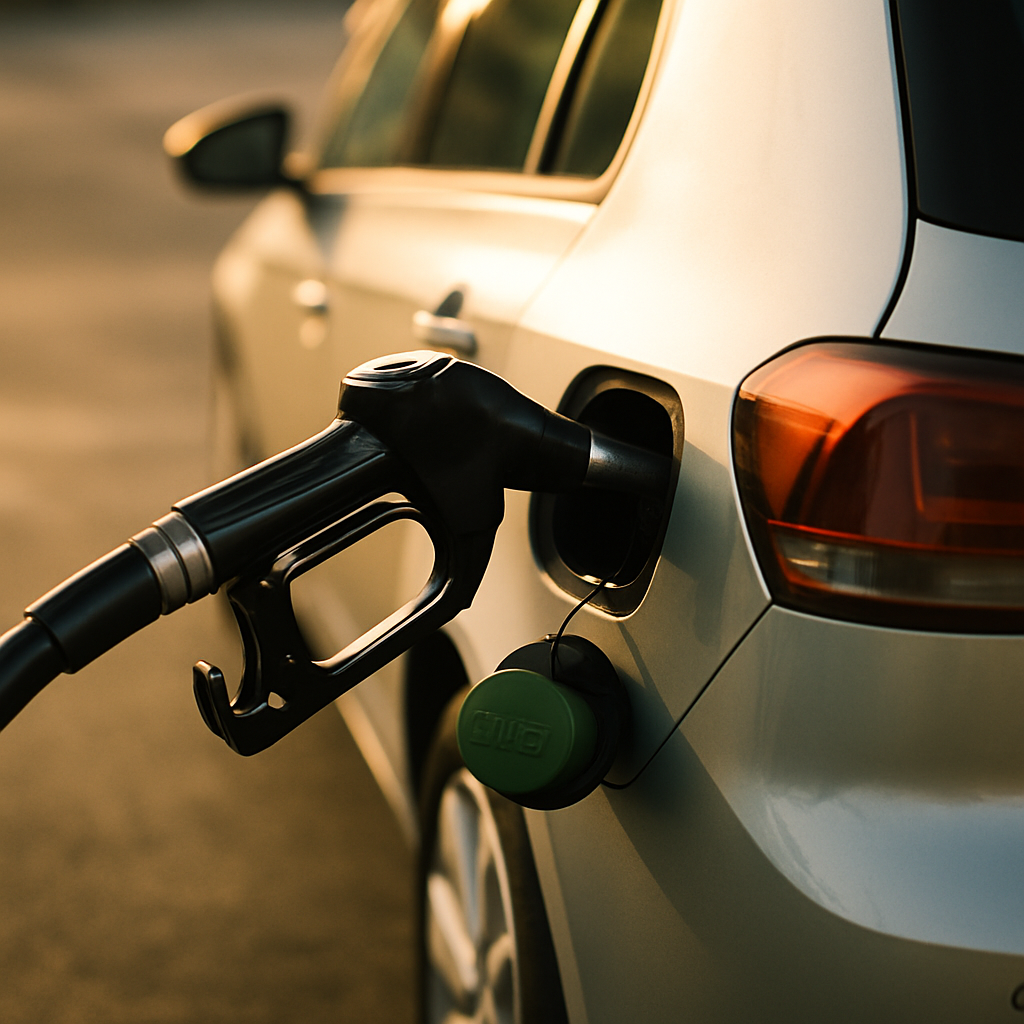
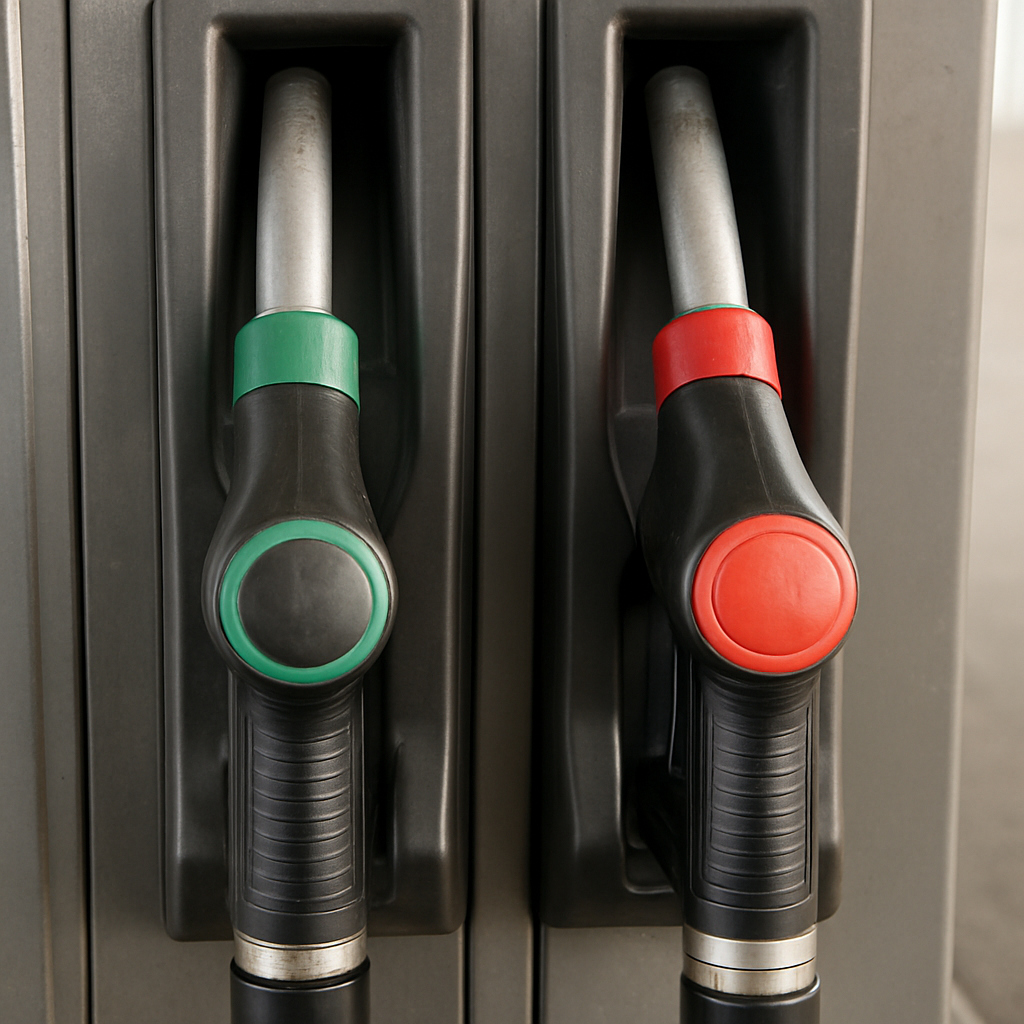
It happens more often than you'd think — about 150,000 UK drivers a year put the wrong fuel in their car at the pump. The diesel hose is the fatter one with the green collar; the petrol nozzle is slimmer and usually black or red. In the rush of a forecourt visit it's an easy mistake. The good news: if you stop before driving away, the fix is fast and your car comes through unscathed.
Here's exactly what to do, in the order that matters.
1. Don't start the engine
This is the single biggest factor in how much it'll cost you. Petrol in a diesel engine acts as a solvent rather than a lubricant. A diesel high-pressure pump and injectors rely on diesel itself for lubrication — switch the engine on with petrol-contaminated fuel in the lines and you risk shearing the pump and pitting the injectors. That can be a £3,000-£5,000 repair on a modern common-rail engine.
If the key's already in the ignition, take it out. Don't even turn the dashboard on — modern cars prime the fuel pump on the first key turn.
2. Push the car to a safe spot
If you're still on the forecourt, ask the cashier for help pushing the car to a parking bay or out of the live pump area. Most fuel stations are used to this and have done it many times before. Engage neutral and steer; with two or three people the car moves easily on flat ground.
If you've already driven away and you're now at the side of a road, switch the hazards on and call as soon as it's safe.
3. Call a mobile fuel drain service
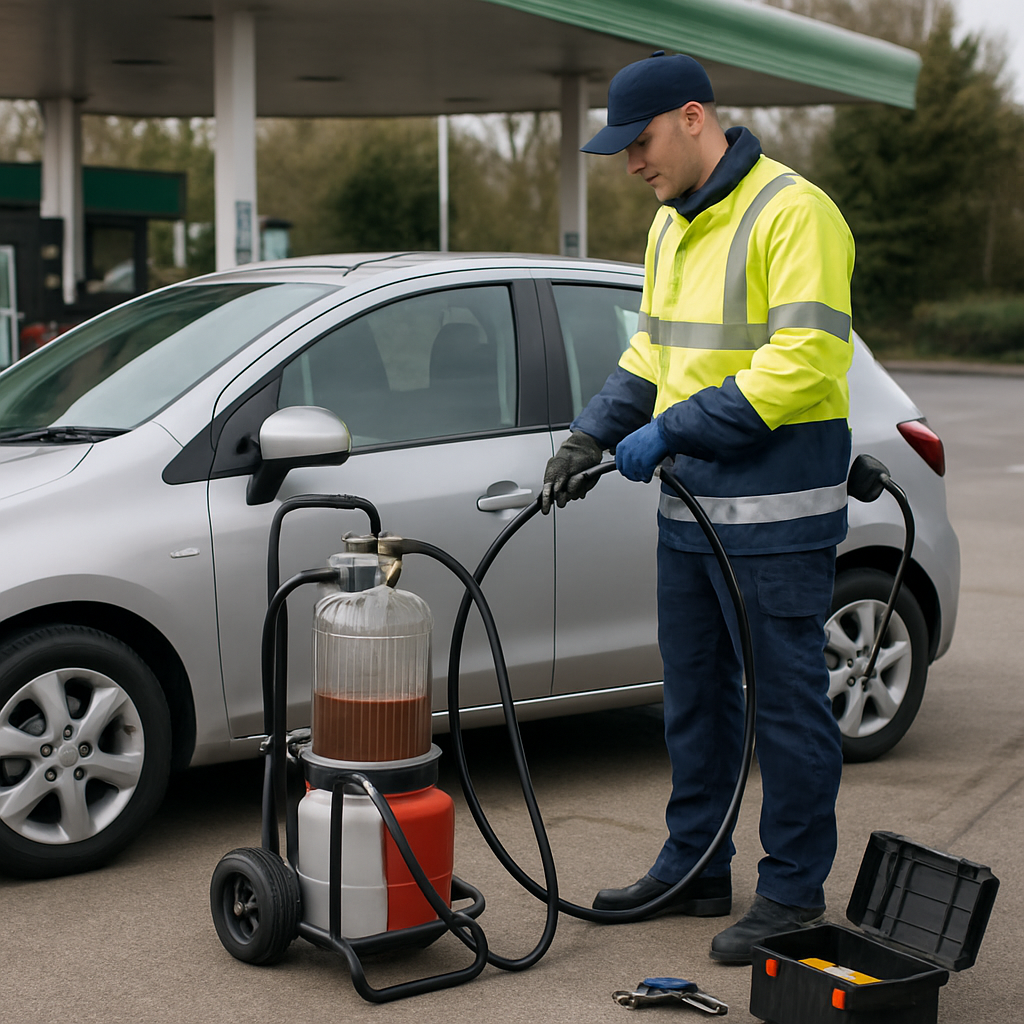
This is where we come in. TNS 365's mobile fuel drain service is 24/7 nationwide and the typical UK response time is 60-90 minutes. The engineer arrives in a self-contained drain unit, removes the contaminated fuel from the tank and lines, disposes of it under the relevant waste-licence rules, refills you with fresh diesel, and bleeds the system so the car starts cleanly. The whole roadside job is normally complete in under 90 minutes.
Card payment is taken upfront — no need for a pre-existing account — and we give you a fixed quote before the engineer rolls.
How long does the drain take on-site?
Allow about 60 minutes from the engineer arriving to driving away. Tank size and how much wrong fuel went in are the main variables; a half-tank of petrol in a diesel takes longer than a few litres.
How much does a fuel drain cost?
For most passenger cars and small vans the call-out is a fixed fee in the range of £225-£295, including the disposal of the contaminated fuel and a starter amount of correct fuel to get you to the next station. HGVs, larger vans and 4x4s with bigger tanks are quoted separately. We'll give you the exact figure on the call.
That's significantly cheaper than the alternative — towing the car to a workshop and paying labour rates while it sits on a ramp waiting to be drained.
What if I already drove on the wrong fuel?
Pull over as soon as it's safe and switch the engine off. The longer the engine runs on contaminated fuel, the higher the risk of damage to the pump and injectors. Even short distances are usually recoverable, but every kilometre raises the odds. Once we've drained and flushed the system, your engineer will check for fault codes; if anything's lit up, we'll let you know whether it's a clear-and-go or whether the car should be looked at by a workshop.
One last thing — does insurance cover it?
Misfuelling cover is sometimes included in comprehensive policies and is usually a small add-on if you don't have it. Check your policy schedule under "misfuelling" or "wrong fuel" — even where it's covered, you'll often pay upfront and reclaim the cost on the policy.
Need a wrong fuel drain right now?
Call our 24/7 dispatch on 0330 0433 365 or request a call-back — typical UK ETA is 60-90 minutes and we accept card payments upfront for non-account customers. See our mobile fuel drain service page for full coverage details.