A blow-out at the side of the M6 looks dramatic and feels worse — but the actual fix is one of the most well-rehearsed jobs in commercial-vehicle repair. A trained mobile tyre fitter can have a 26-tonne HGV back on the road inside 90 minutes most of the time. Here's the minute-by-minute breakdown of how that actually works.

Minute 0-3: the call
The driver calls in, the contact centre logs the location (postcode plus motorway-marker or what3words), the vehicle's tyre pattern (drive, steer, trailer), and the kind of failure (slow puncture, blow-out, sidewall damage, valve failure). That last point matters — a sidewall blow-out can't be repaired and needs replacement; a clean tread puncture might be plug-and-go.
Minute 3-15: dispatch
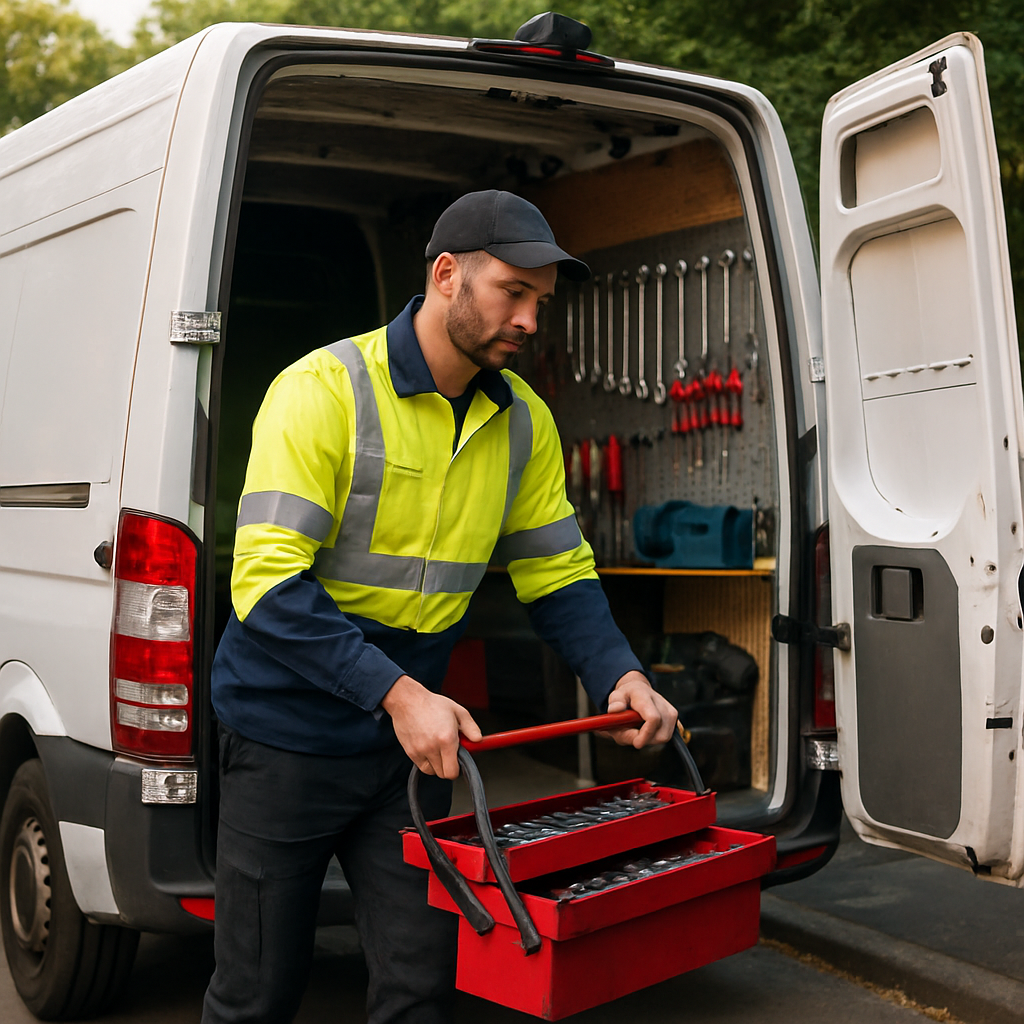
Tyre work needs a specialist van — a normal breakdown engineer can't change a 22.5-inch HGV tyre. The dispatcher pushes the job to the closest available mobile tyre fitter with the right tyre stock for the vehicle's pattern. The fitter accepts on their phone, the ETA appears on the customer's dashboard, and the wheels-up clock starts.
Minute 15-75: fit travel
This is the variable bit. UK average is around 45 minutes of fitter travel time, depending on density. London or the M62 corridor is closer to 30. Rural Wales or Scotland's central belt outside the rush is closer to 70. Either way, this is the bit that defines whether it's a 60- or 90-minute job overall.
Minute 75-105: the fit itself
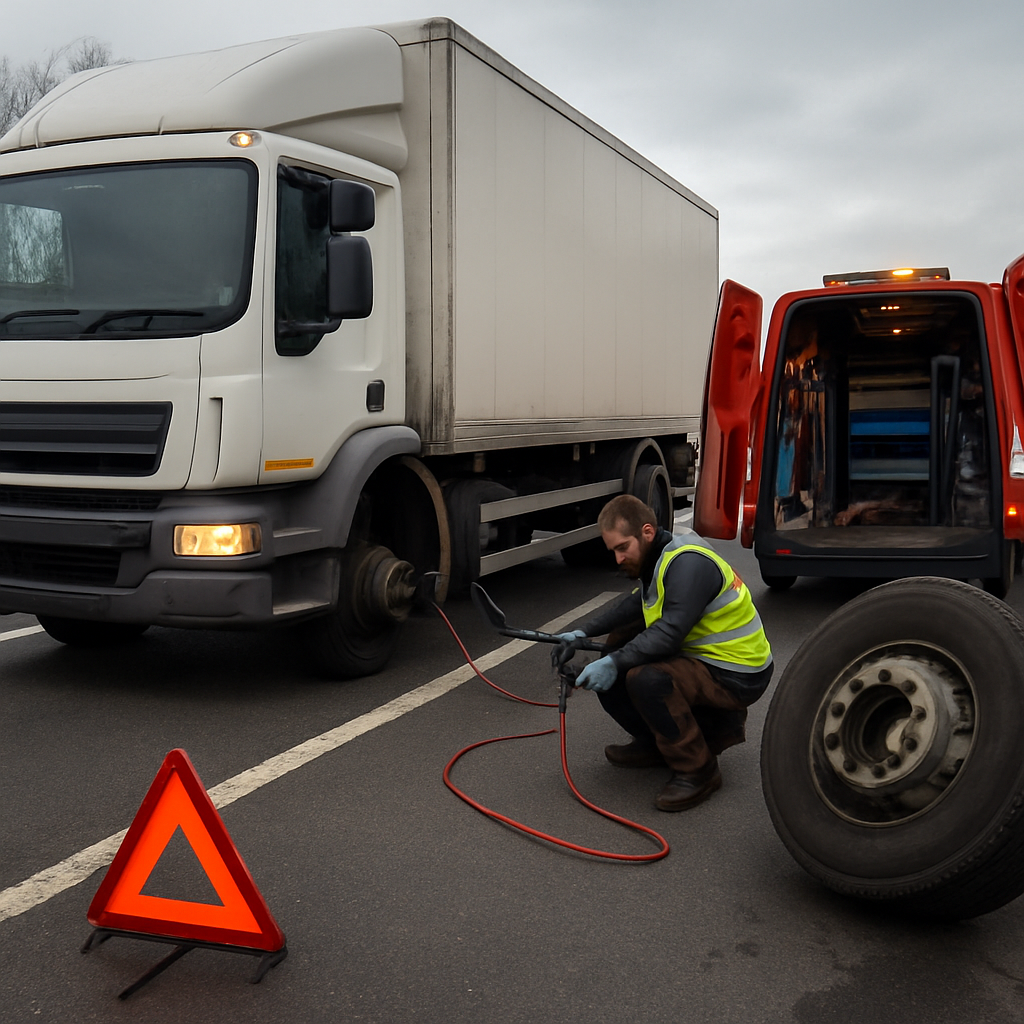
Once on-site, the fitter wheels-chocks, deploys hi-vis cones, jacks the axle, removes the wheel, fits the replacement (or repairs in-situ if the damage allows), torques to the manufacturer's spec, drops the jack, scrubs the kit and the driver signs off. A clean drive-axle change on an HGV is 25-30 minutes; a tricky inner-twin on a 6×4 tractor is 40+.

Why HGV tyres aren't done by car-tyre fitters
The kit is different. A truck tyre needs a 4,000 Nm pneumatic torque wrench (a passenger car needs 130 Nm), purpose-built jacks rated for 10+ tonnes per axle, bead-breakers sized for 22.5-inch rims, and stock tyres at upwards of 80kg apiece. A passenger-car van and tooling won't do it. The same logic applies to van tyre replacement (different stock again — reinforced sidewalls, C-rated load index) and to agricultural tyre repair, where field-side jobs need bead-breakers and lifting gear sized for combine and telehandler tyres.
Patch, plug, or replace?
For a clean tread-area puncture in an HGV tyre, a regulation plug-and-patch is fine and goes back in service. For a sidewall hit, a chunked block, or a separation, the tyre is binned. The fitter checks against current TIA / BTMA repair guidelines — and we err on the side of replacement on heavily-loaded long-haul applications.
Fleet vs ad-hoc pricing
Our fleet tyre service customers run on agreed per-tyre and per-callout rates with discounts banded by volume. Ad-hoc roadside is a fixed call-out plus tyre cost, with the tyre quoted before the fitter rolls — typical roadside fits land between £280 and £550 all-in for a single drive tyre, depending on size and brand.
Run-flat insurance — does it pay off?
For high-mileage long-haul fleets, yes. For local distribution running 8-hour days, usually not. The maths is mileage × likelihood × downtime cost — the fleet desk has all three numbers, and we can model the break-even on request.
Got a flat right now?
Call our 24/7 dispatch on 0330 0433 365 or use the contact form. Our mobile truck tyre repair service covers the UK around the clock with sized stock for HGV, LCV and trailer tyres.