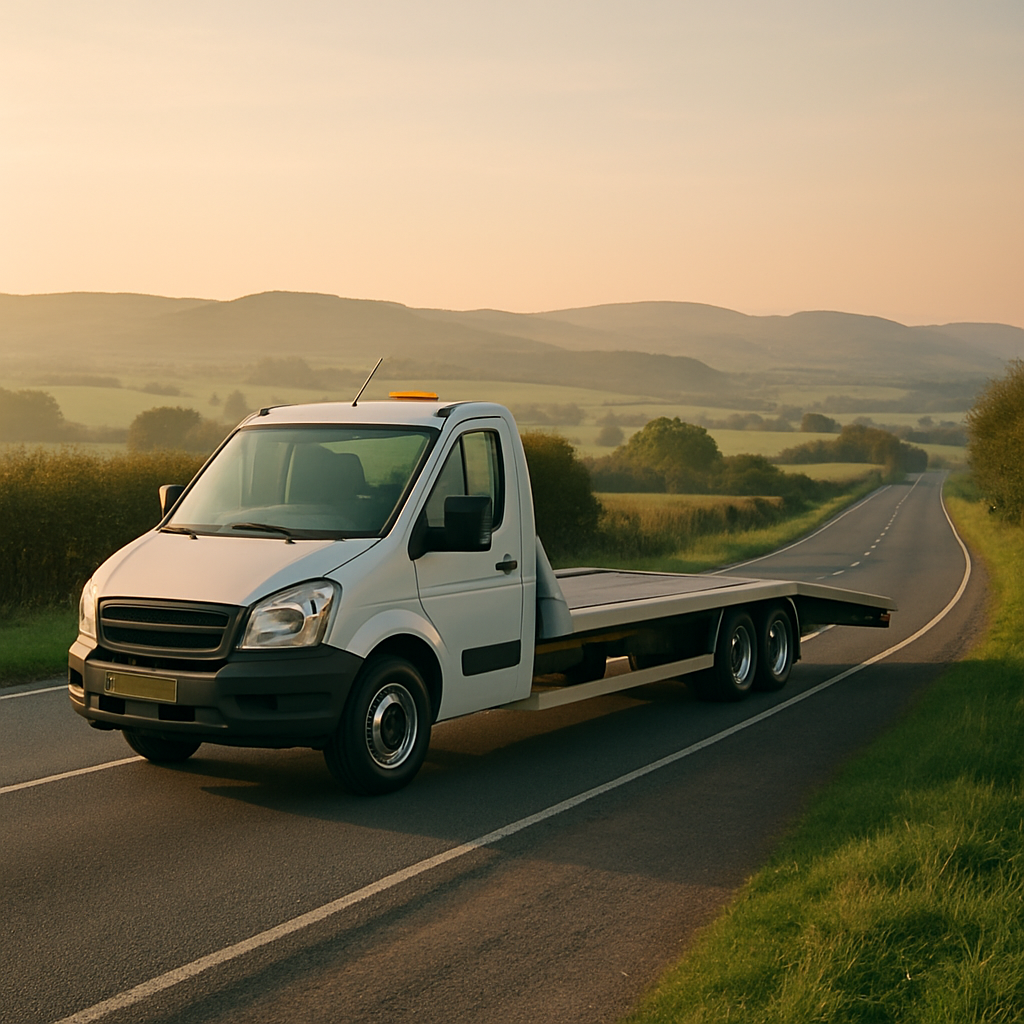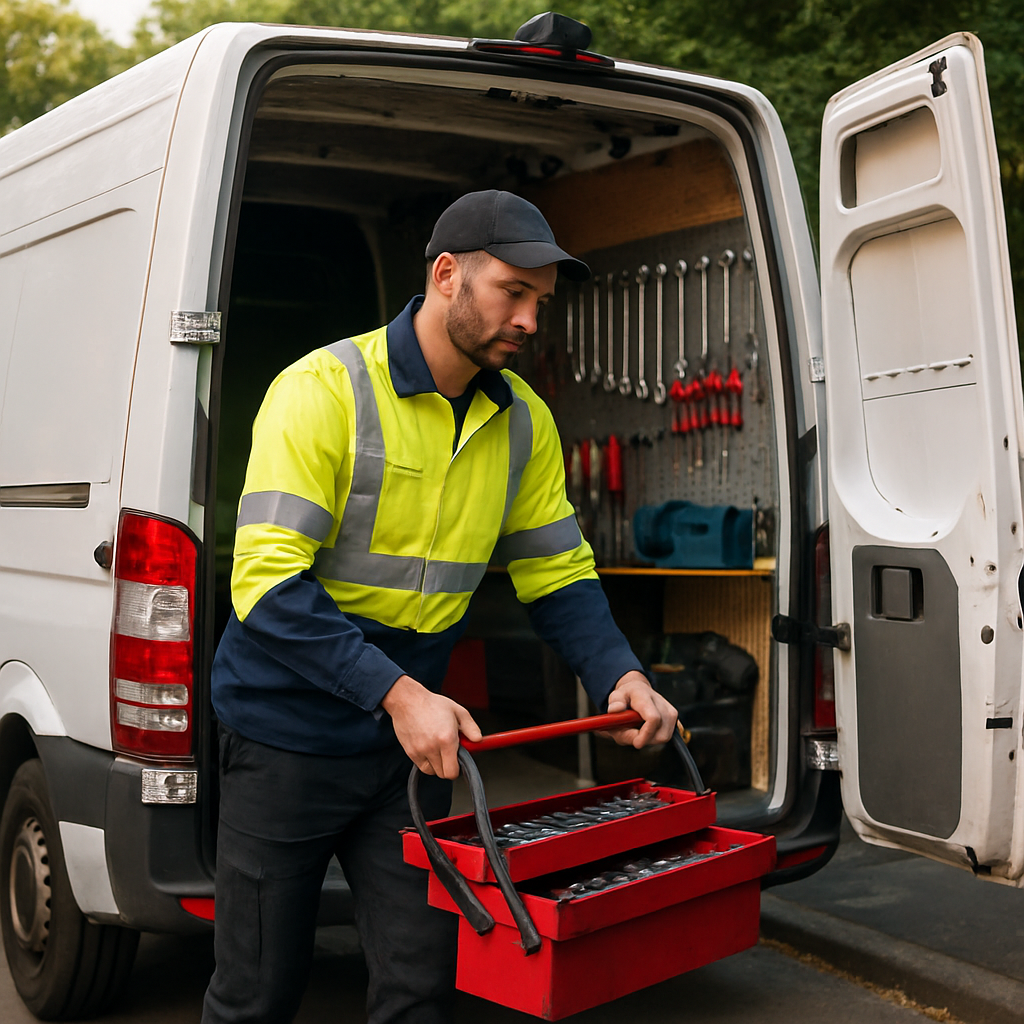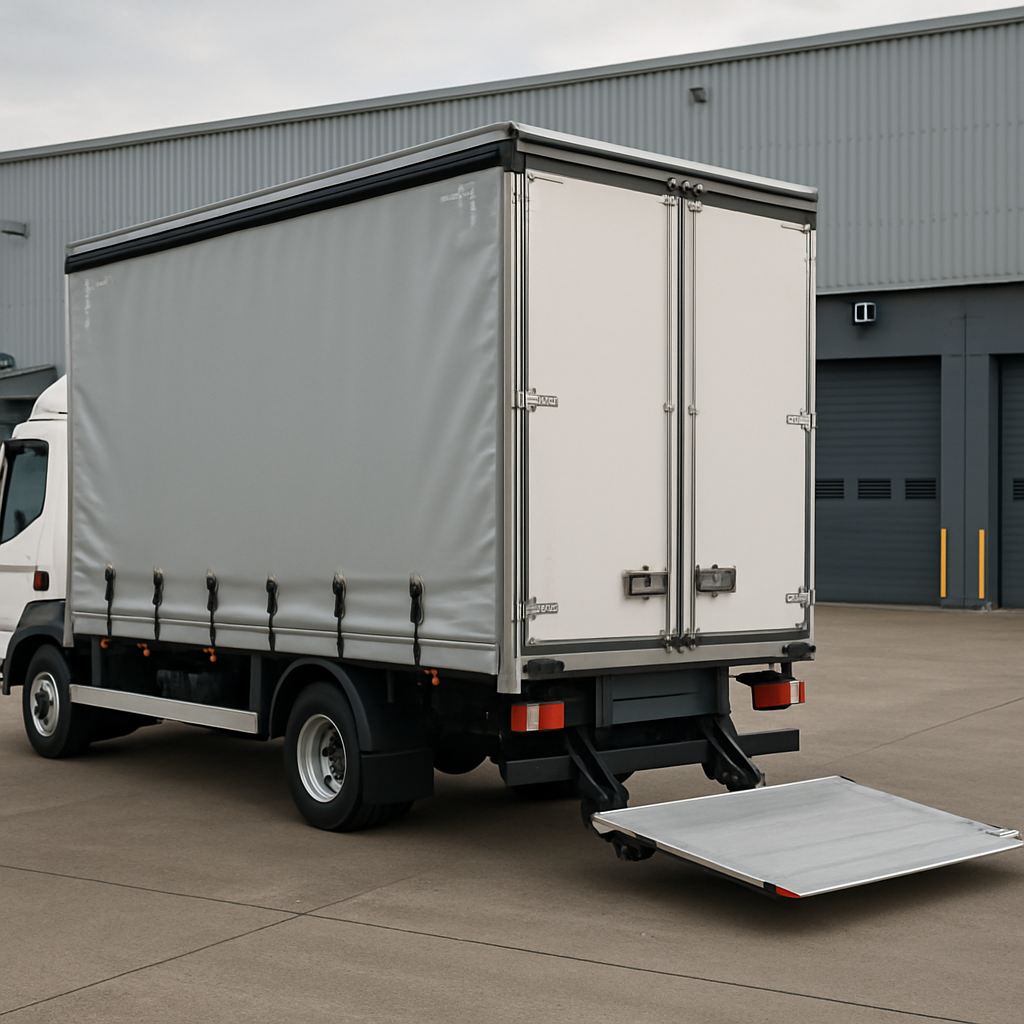
It's 4pm on a Thursday. The driver pulls up at the depot, parks against the loading bay, hits the tail lift button — and nothing happens. Or worse, the lift descends halfway and freezes with a pallet on the platform. The customer's expecting the load tomorrow morning. Here's the playbook for getting the tail lift moving again, fast.
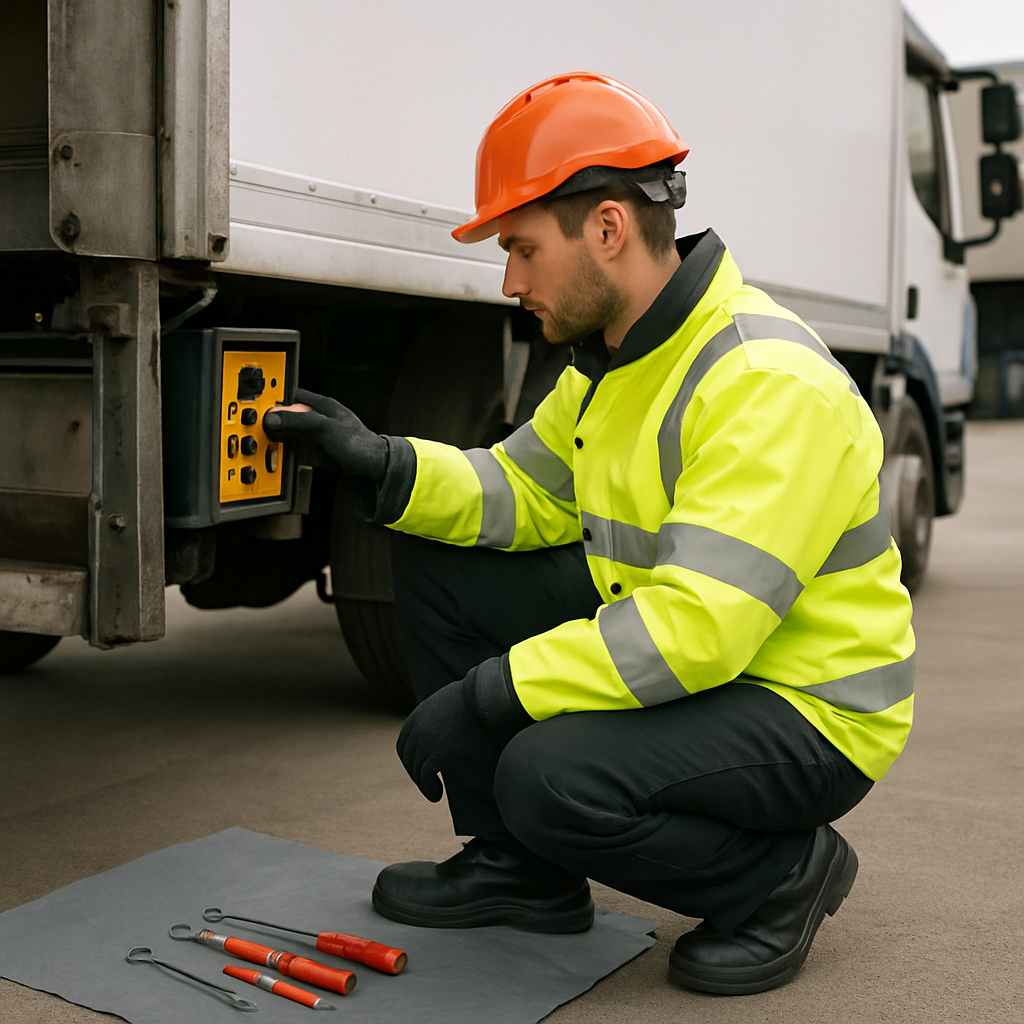
Step 1 — Don't keep cycling the controls
If the lift hasn't responded once, hammering the up/down toggle isn't going to help. What it might do: trip a thermal cut-out on the motor, drain the auxiliary battery, or escalate a small fault into a bigger one. Stop, breathe, and get the diagnostic info.
Step 2 — Get the diagnostic information ready
The dispatcher's first questions when you call:
- Brand and model — Dhollandia, Anteo, Zepro, Ratcliff, Bär, Del. The model number is on the SWL plate near the control box. Different brands need different parts on the van.
- Symptom — completely dead, motor runs but no movement (= hydraulic), moves but stalls under load, descends but won't lift, deploys but won't tilt.
- Position — fully stowed, fully deployed, or stuck mid-cycle.
- Load on the platform — yes/no, weight if known.
- Battery state — fresh / older / been on charge today.
That intake takes 60 seconds and saves up to an hour of wrong-stock dispatch.
Step 3 — The most common 4pm failures
From our depot-call logs, four faults dominate the late-afternoon spike:
- Battery isolator dropped — the simple one. The driver hit the master isolator earlier and forgot. Free fix; the engineer just resets it.
- Microswitch failure on the platform — usually the platform-deploy or platform-stow switch. Cheap part, 20-minute fix.
- Solenoid valve stuck — the lift won't tilt or won't lower-under-load. A clean and rebuild handles 80% of these; a few need a new valve.
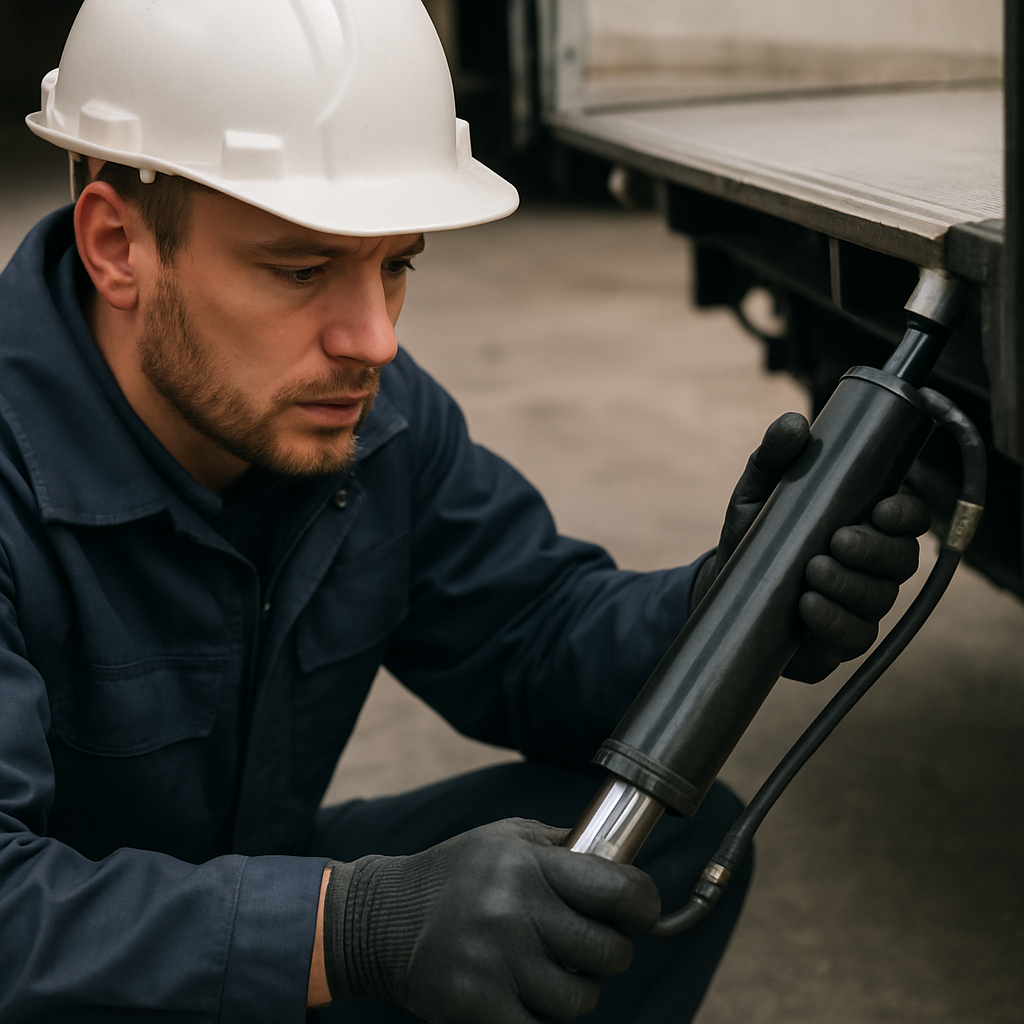
- Hydraulic ram seal failure — typically shows as a slow descent under load, oil weeping at the cylinder seal. Same-day repair if seals are in the van; otherwise a day's wait for parts.
Step 4 — Same-day vs morning
If your call lands by 4pm, the same-day attendance probability is high. Engineers carry universal stock for the major brands. If the brand-specific part is needed and it's late in the day, the part is couriered overnight and the engineer comes back first-shift.
Account fleets get priority dispatch, which often turns "tomorrow morning" into "engineer arrives by 6pm".
Step 5 — Recovery scenarios
Two scenarios where the tail lift can't be made operational on the day:
- Major hydraulic failure with no replacement ram available — the lift has to be manually stowed and locked, the vehicle goes back into rotation without lift function until parts arrive.
- Structural damage — bent platform, twisted column, frame damage from impact. These are workshop jobs; the vehicle is recovered to a body shop.
The engineer makes the call on-site. We don't promise to fix what physics won't let us.
The depot-rotation lesson
Tail lift failures concentrate on Thursdays and Fridays — particularly between 3pm and 6pm — because that's when a week's accumulated micro-faults finally trip a major fault. A planned quarterly tail lift inspection on a fleet rotation prevents most of these. We can plug into your maintenance plan.
Tail lift jammed right now?
Call 0330 0433 365 24/7. Have the brand, model, symptom and load state ready when you call — that's all we need to put the right kit on the road. See our 24/7 mobile tail lift repair service for fleet account setup or contact us for planned maintenance.