The electric-van breakdown is a different shape of problem than a diesel one. A diesel engine that dies has a thousand possible causes; an EV that won't move has a much smaller list — but each item on that list demands different equipment, different specialism, and very different recovery rules.
Here's the practical playbook for fleet operators running electric vans in the UK.
What "battery dead" actually means on an EV
Electric vans don't usually run completely flat — the BMS (battery management system) reserves about 5% of usable capacity to protect the cells. What "flat" usually means is one of three things:
- SoC (state of charge) below the driveable threshold — the van's range estimate drops to zero and the powertrain de-rates. This is recoverable with a top-up charge.
- 12V auxiliary battery flat — the small lead-acid battery that runs the door locks, dashboard and DC-DC converter. Most "EV won't start" calls are actually this. A jump-start solves it; the traction battery is fine.
- Traction-battery fault — a real cell or BMS fault. The van isn't moving and won't take a charge; this needs recovery.
The first call into our dispatch desk asks which of the three it is. The right kit on first dispatch saves the most time.
Mobile EV recharge — what it actually does
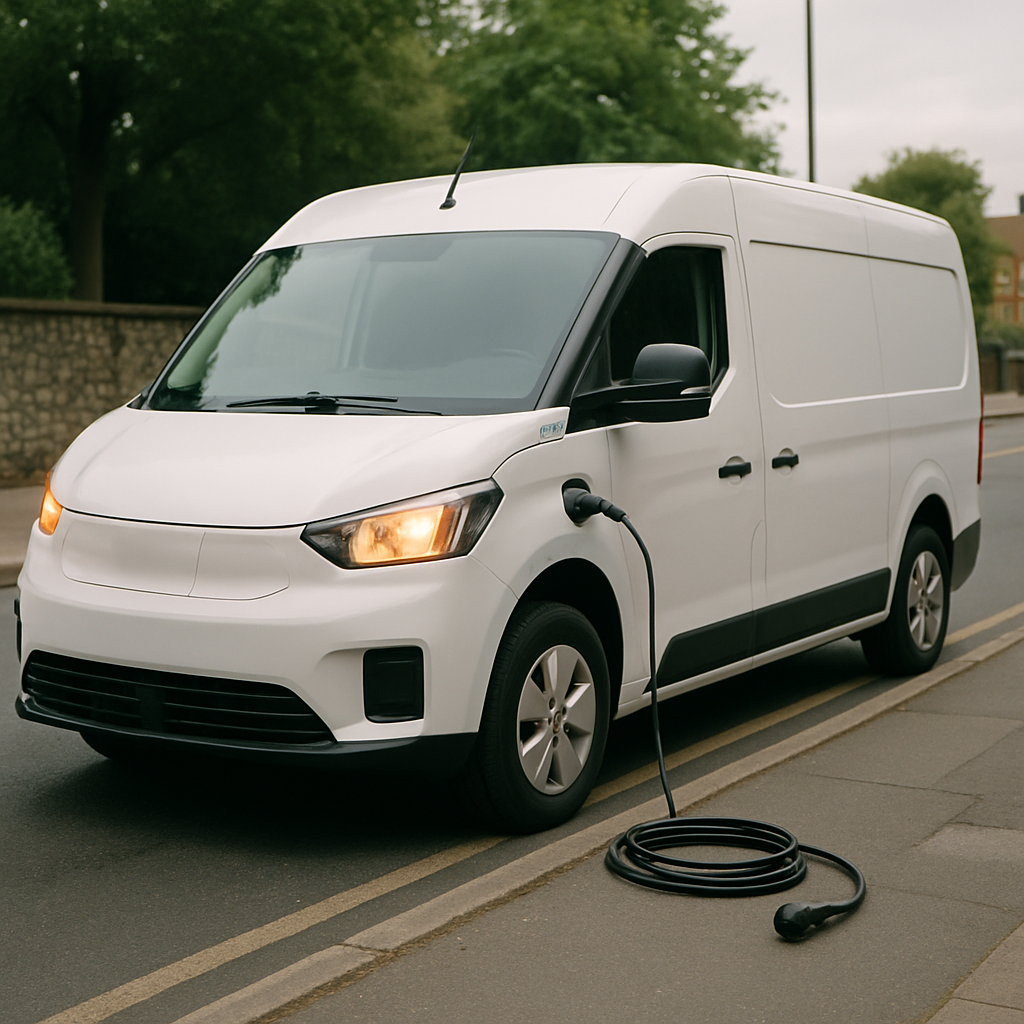
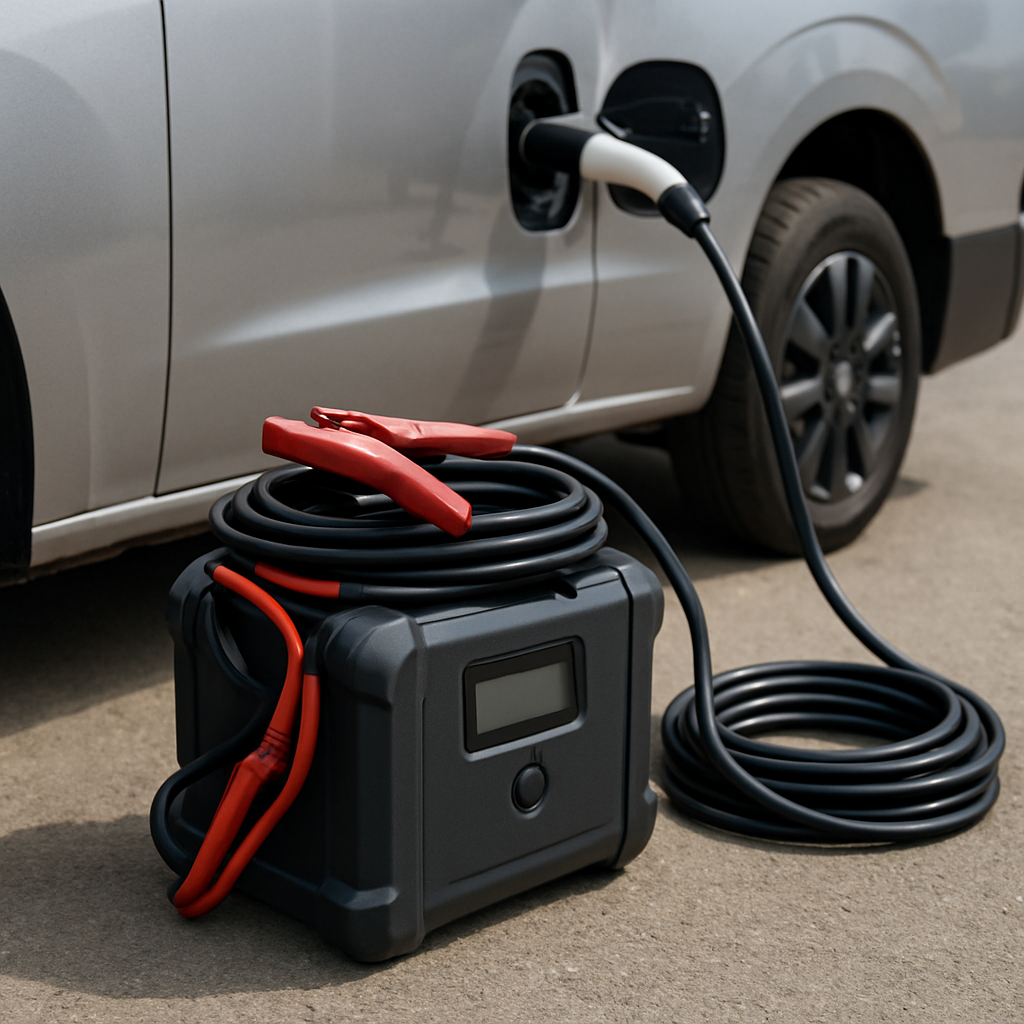
For SoC-below-threshold cases, our mobile EV recharge service brings a portable DC fast-charge unit to the van's location. We hook into the CCS or CHAdeMO port (UK fleet vans are mostly CCS), put 5-15kWh into the traction battery, and the van drives on to the next charging point or destination under its own power. The whole roadside top-up takes 25-45 minutes depending on the van's accept rate.
For 12V faults, a normal jump-pack on the auxiliary battery solves it in five minutes — same as any internal-combustion van.
When recovery is the only option
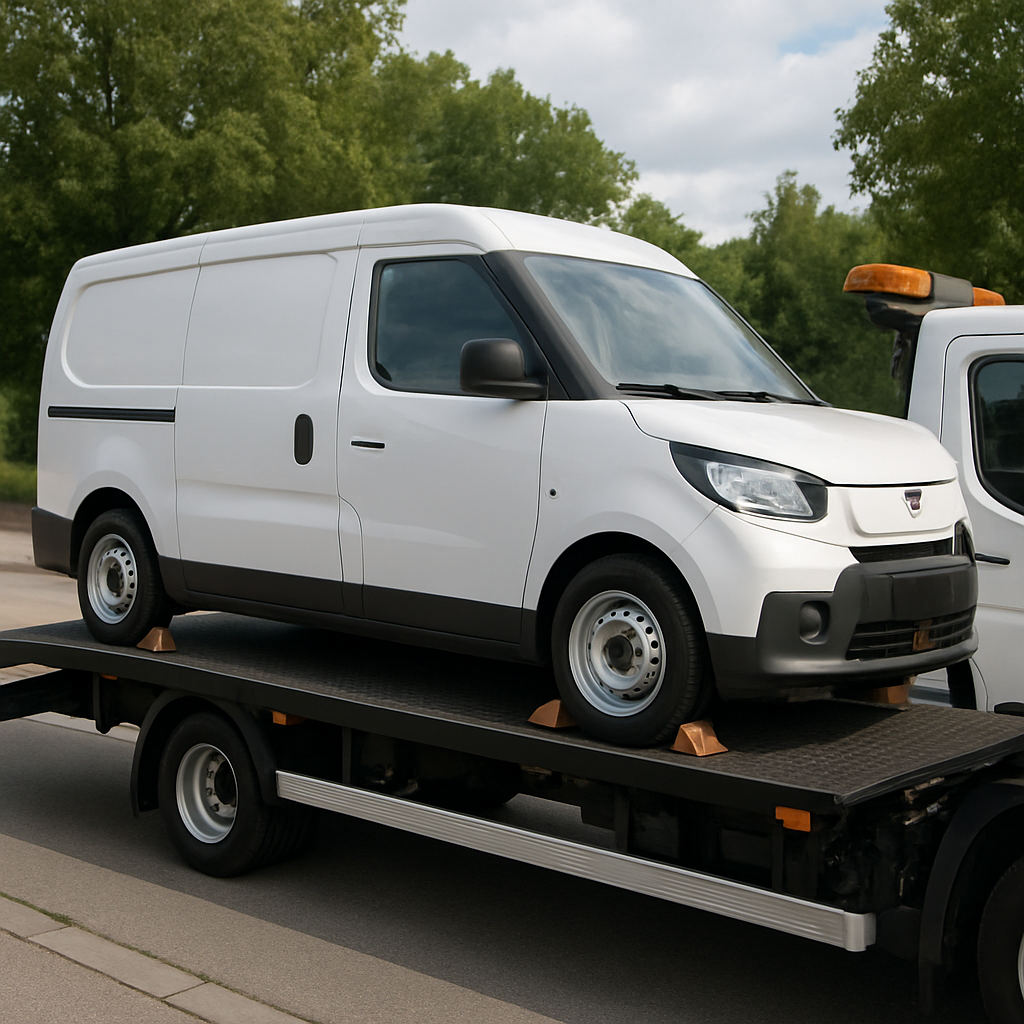
For traction-battery faults, the van must be recovered — and EVs have specific transport rules:
- No flat-towing. Most EVs cannot be flat-towed because the drive motors generate back-EMF when the wheels turn, which can damage the inverter.
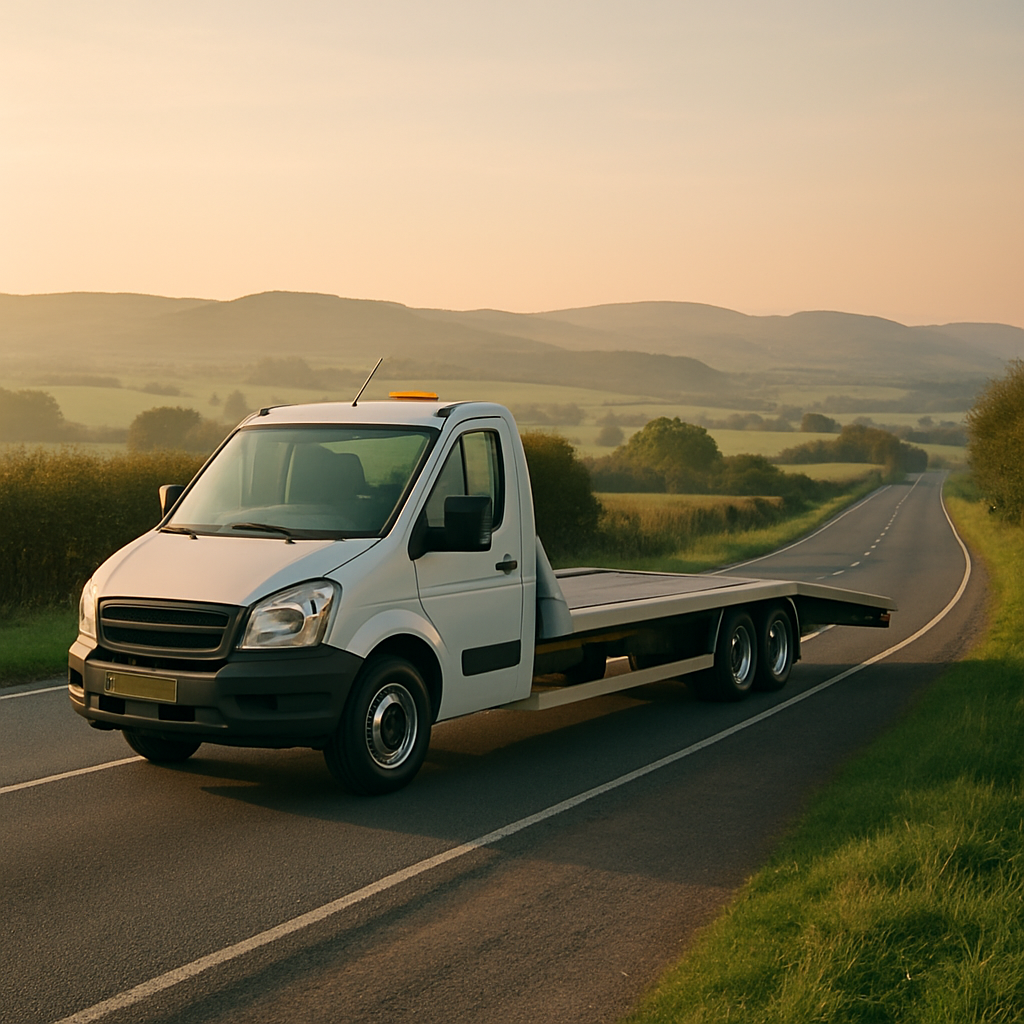
- Flatbed recovery only for any EV that's lost driveline control. The whole vehicle goes on the bed, all four wheels off the ground.
- Thermal-event protocol. If the traction battery shows any sign of thermal runaway (heat, vapour, smell), recovery operators have specific isolation protocols. We carry the kit and the procedure.
What about the charge-cable problem?
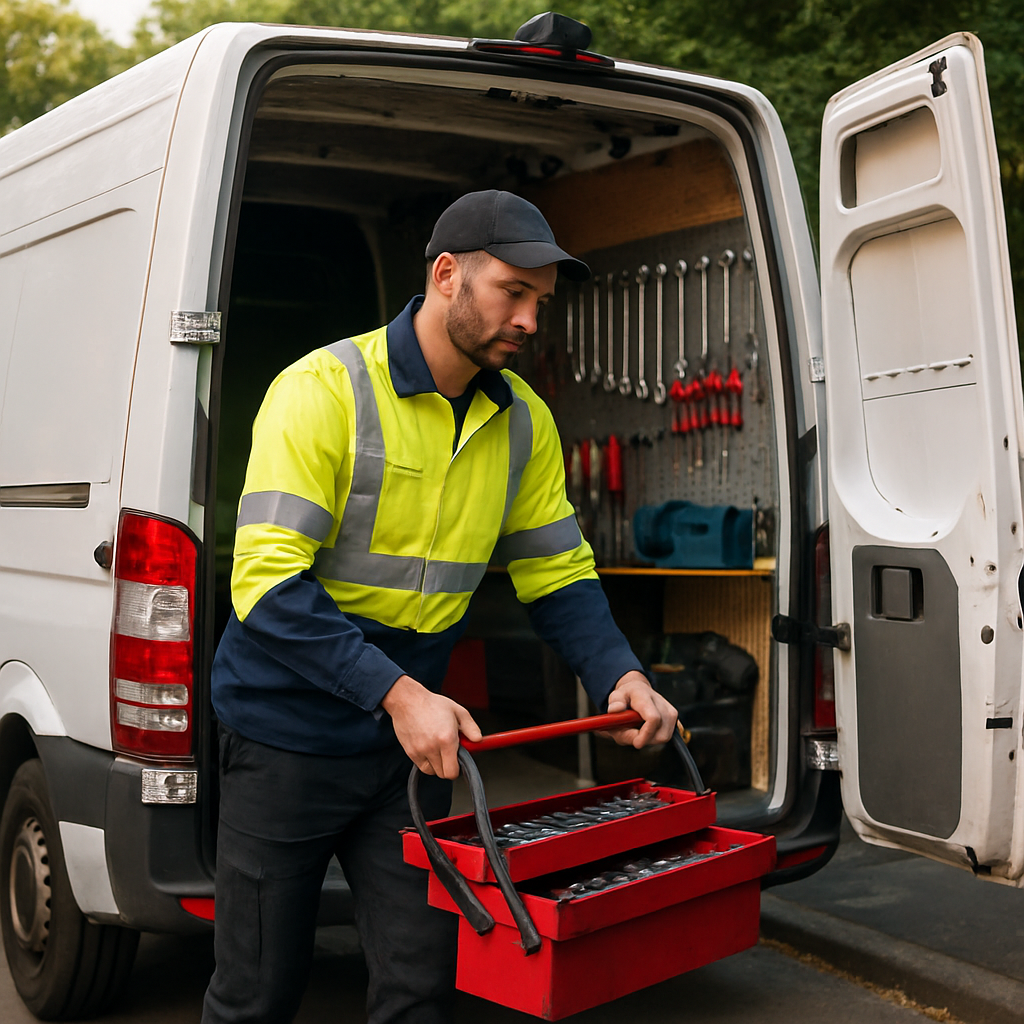
The other common EV roadside call: "I plugged in but it won't charge." Cause is usually one of: locked port (BMS won't authorise), failed CP signal on the cable (cable fault), payment-app authentication failure (charge-network issue), or charger-end fault. Our engineers carry diagnostic readers for the major BMS makes (Stellantis EBM, VW MEB, Ford MachE, Mercedes EQ) and can usually clear the fault on-site or identify whether the issue is the cable, the charger, or the van itself.
What it costs
Mobile EV recharge: typical fixed call-out plus a per-kWh rate, all-in usually £180-£280 for a 10-15kWh top-up. 12V jump-start: standard breakdown call-out (£140-£180). Recovery is per-mile plus uplift fee — same as any commercial recovery but with the flatbed-only requirement.
Fleet considerations
For fleets running 50+ EVs, the breakdown profile is heavily skewed to 12V faults and SoC-below-threshold incidents (range anxiety mismatch on routes). A planned 12V annual replacement programme alone can drop your roadside callouts by 40%+.
EV stuck right now?
Call 0330 0433 365 24/7. See our EV breakdown and mobile recharge service for fleet account information, or request a call-back for non-urgent enquiries.