
Business Automation
Remove the work nobody should be doing by hand
Workflow automation, links between the systems you already have and practical uses of AI, built by a team that automates its own 24/7 operation.

Automation we rely on ourselves
We run a busy breakdown and call handling operation, so we automate the same kind of work our customers do: reading supplier invoices, matching them to jobs, chasing missing paperwork, sending updates and building reports.
That means we build for real days, with messy emails, missing details and exceptions, not for a tidy demo. When something does not fit the rules, a person is told and the work does not stall.
- Built for exceptions, not just the happy path
- Works with the systems you already use
- People stay in charge of decisions that matter
Three areas
Where we help
Workflow automation
Repeated steps, approvals, reminders and notifications handled by the system, with a clear record of who did what and when.
Linking your systems
Connecting older systems, inboxes, spreadsheets and newer software so the same data is not typed in twice, without ripping anything out.
Practical AI
AI where it genuinely helps: reading emails and documents, sorting and summarising, drafting replies and pulling out the details that matter.
Typical jobs we take off people's desks
If someone in your team does the same thing every day, it is worth a look.
Inbox handling
Reading incoming emails, sorting them, filing attachments against the right job or account and drafting replies for a person to approve.
Invoices and paperwork
Pulling details from invoices, order numbers and documents, matching them to your records and flagging anything that does not add up.
Chasing and reminders
Following up missing information, approvals and payments on a schedule, so nothing relies on someone remembering.
Reports that build themselves
The weekly or monthly report that someone pieces together by hand, produced automatically and sent to the right people.
Routine calls and messages
Confirmations, updates and chases by text, email or AI voice call, logged back against the job.
How we work
Start with the dull job that wastes time
The best automation targets are rarely glamorous. We look for the repeatable work first, and we say so if the process needs fixing before it needs automating.
Map the process
We sit with the people doing the work, see where the time goes and agree what success looks like.
Pick the first win
We start with one job that is frequent, painful and low risk, so you see the benefit quickly.
Build and test
We build against your real systems and data, and test with real examples, including the awkward ones.
Run it alongside people
It runs in a checked mode first. Your team reviews the results before it is trusted to act on its own.
Expand from there
Once one job is running well, we look at the next. Small steps, each one paying its way.
Related technology
Bespoke Software Development
Software designed around one operation instead of the other way round.
Learn moreDashboards & Reporting
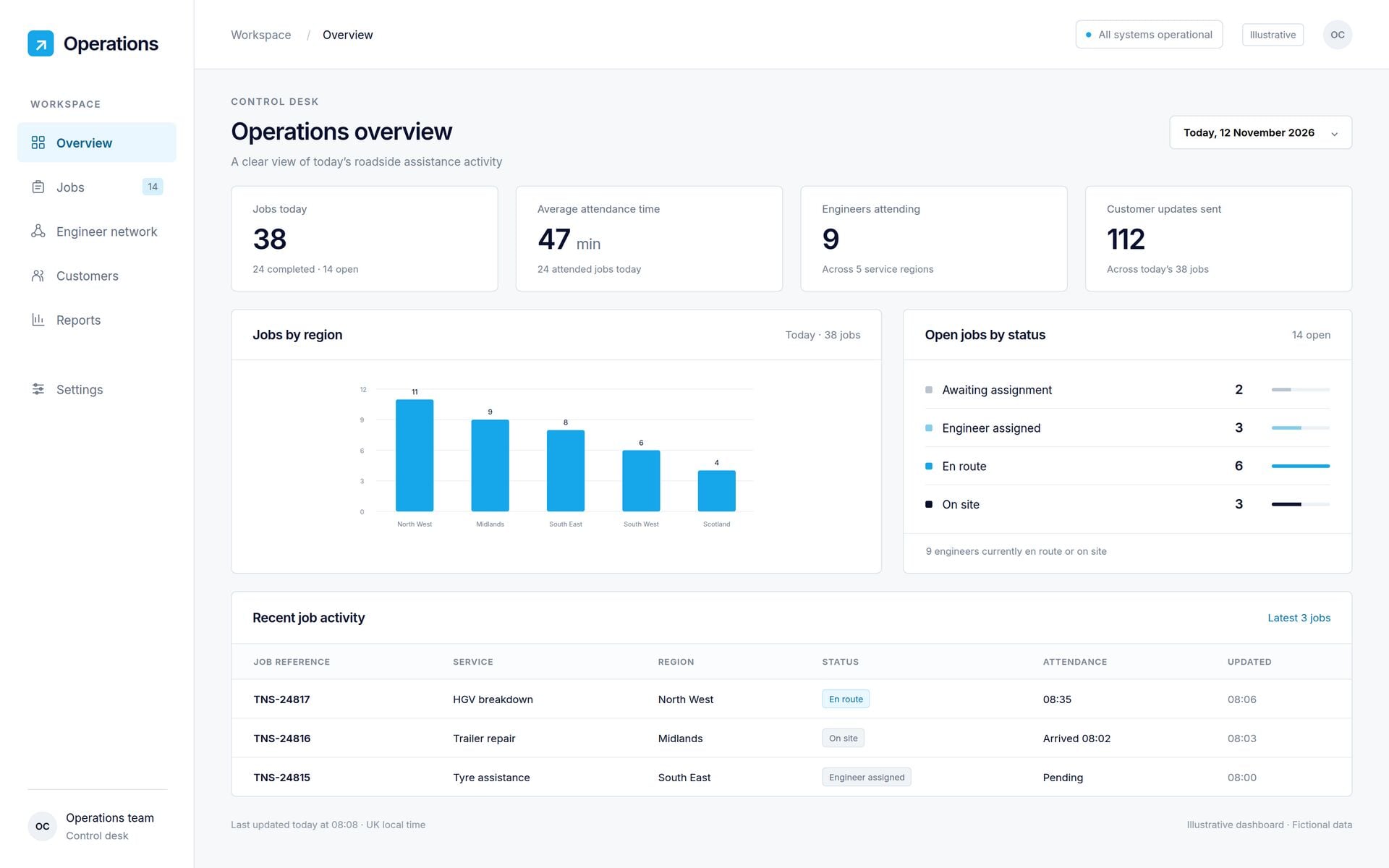
Live operational views that replace the morning spreadsheet.
Learn more
AI Telephone Answering
Voice agents that answer, qualify and route calls, designed with the people who take them today.
Learn moreQuestions we are asked
Do I need to replace my legacy system?
Not necessarily. Linking it to newer tools can extend its life and remove most of the double keying. If replacement really is the right answer, we will say so.
Where is AI useful?
Where there is a lot of unstructured text or repetitive, judgement-light work: emails, documents, invoices, notes and routine calls. We will also tell you where it is not, and where a simple rule does the job better.
What if the automation gets something wrong?
We design for it. Automations check their own work where they can, anything uncertain is passed to a person, and every action is logged so it can be reviewed and put right.
How quickly can we see results?
We aim to get a first, small automation working early, so you see a real benefit before committing to anything bigger. Timings depend on your systems, and we will be clear about them up front.
Discuss a Bespoke Project
Tell us the operation and the problem. We will tell you honestly whether and how we could help.